
Centre for the Study of Health, Ethics, and Society
Publication: Rethinking Cooperation in Cold War Europe: Difficult Friendships across the ‘Nylon Curtain’
8 September 2026
The Centre for the Study of Health, Ethics and Society (CHES) is delighted to announce the publication of Rethinking Cooperation in Cold War Europe: Difficult Friendships across the ‘Nylon Curtain’, edited by Ulf Schmidt and Will Studdert and published by Bloomsbury Academic.

Bringing together historians working in a wide range of disciplinary, national, and thematic contexts, this edited collection examines the nature of cooperation across the political and ideological divides of Cold War Europe. The contributions investigate the relationships, exchanges, collaborations, and shared interests through which individuals and institutions crossed the ostensibly impermeable ‘Iron Curtain’ dividing the continent into two opposing political and ideological systems.
The book builds upon the Hungarian historian György Péteri’s ‘Nylon Curtain’ metaphor, which argues that Cold War divisions were very real and yet not insurmountable. Whilst acknowledging the political conflicts, restrictions on movement, surveillance, and the inequalities in power between East and West, it explores how historical actors across the continent operated within these constraints. As the chapters collectively demonstrate, scientists, activists, intellectuals, cultural figures, and professional communities maintained relationships across national and ideological boundaries, whether motivated by political solidarity, shared intellectual traditions, enduring professional commitments, or more pragmatic forms of mutual interest.

Across twelve chapters, Rethinking Cooperation in Cold War Europe explores these ‘difficult friendships’ through four broad areas: politics and propaganda; ideas and concepts; science and culture; and environment and technology. Together, they offer a wide-ranging account of Cold War cooperation, encompassing peace activism, medical ethics, cultural tourism, pharmaceutical research, environmentalism, popular music, neuroscience, and biotechnology. The studies present an alternative history of post-war Europe, in which political and ideological divisions were often perforated by negotiations and exchanges. The forms of cooperation highlighted throughout the book never entirely transcended these tensions, and were often characterised by suspicion and competing interests. Yet they also provide insights into how relationships can be formed and endure during periods of geopolitical confrontation.
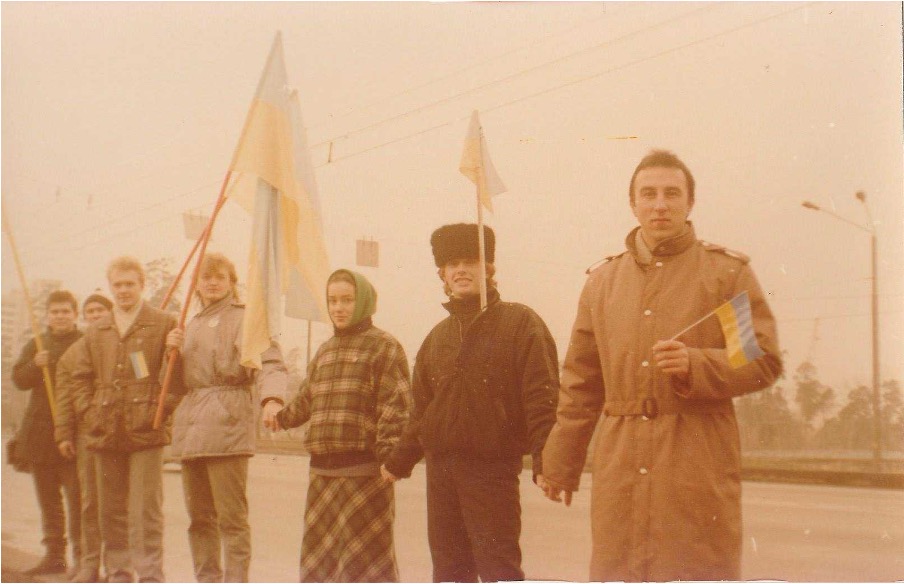
It also addresses questions extending beyond Cold War historiography, asking what possibilities there may be for creative forms of cooperation in our own historical moment as European states and institutions once again confront military conflict, disinformation campaigns, and fractured international relationships. The historical experiences examined here raise important questions about the conditions under which communication and exchange can continue across political and ideological boundaries.
Rethinking Cooperation in Cold War Europe is available in hardback and as an Open Access ebook under a CC BY-NC-ND 4.0 licence, with Open Access publication funded by the European Research Council.
The book is available for purchase or download here: https://www.bloomsbury.com/uk/rethinking-cooperation-in-cold-war-europe-9781350436992/
Editors:
Professor Ulf Schmidt & Dr. Will Studdert
ulf.schmidt"AT"uni-hamburg.de & william.studdert"AT"uni-hamburg.de

